Your first year with microcement: what to clean with, what to do with a stain and when to refresh the sealer
Microcement is easy to look after, but it has its rules. Most damage is not done by accidents but by the wrong cleaning products used in good faith. This guide takes you through the first weeks, everyday cleaning and the most common stains. It also applies to resin floors, and we note the differences separately.
Published · 3 min read
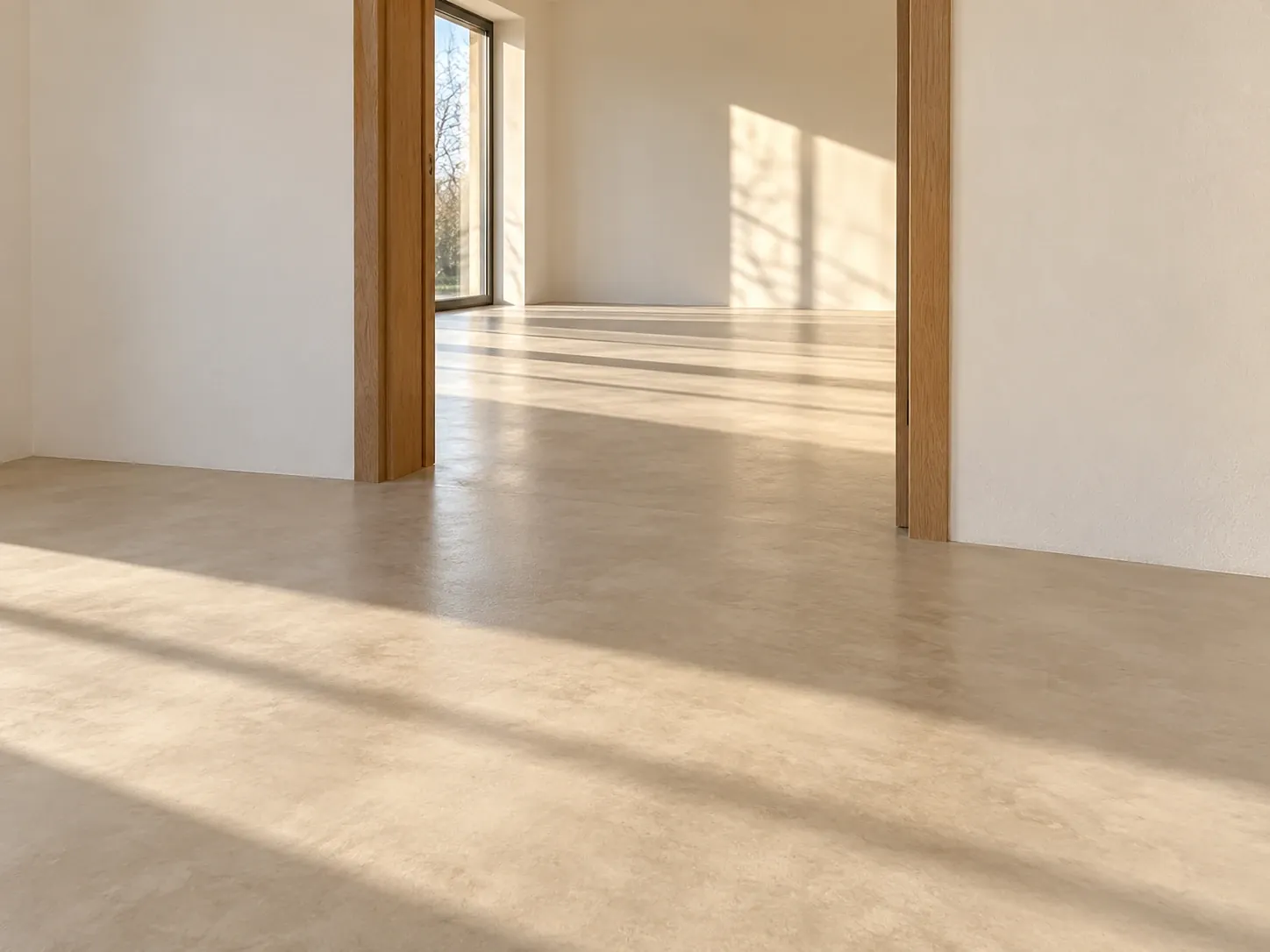
The first weeks after handover
The sealer reaches full hardness only some time after it is applied. During this period avoid dragging furniture, laying rugs with rubber backing and hard scrubbing. Place furniture carefully, with felt pads under the legs. In a bathroom, keep to the first-use date for the shower that we give at handover. These few weeks of care pay off for years.
Everyday cleaning
A vacuum with a soft brush and a microfibre mop dampened with water and a mild, pH-neutral cleaner work best. Remove sand and grit as you go, because they act like sandpaper. Put a doormat at the entrance. Do not flood the floor; a well-wrung mop is enough.
What not to use
These products can dull or damage the sealer, even if they work wonderfully on tiles.
- Acidic descalers, vinegar and grout cleaners.
- Chlorine bleach and strong disinfectants.
- Solvents, acetone and removers.
- Abrasive creams and powders, scourers and hard brushes.
- Steam cleaners, unless the care instructions explicitly allow them.
Stains step by step
Wine, coffee, juice: blot immediately with an absorbent towel, then wipe with a damp cloth and a mild cleaner. Grease and oil: collect them, then wash with warm water and a little washing-up liquid and rinse with clean water. Hard-water limescale in a bathroom: remove regularly with a squeegee after showering and wash with a mild cleaner, rather than waiting for deposits to build up.
If a stain will not come off, do not reach for stronger chemicals. Write to us and we will suggest what to do without damaging the sealer.
Scratches and chips
Fine scratches in the sealer are often visible only at an angle and do not go through the microcement. Deeper chips, for example after a heavy object falls, are repaired locally. Do not try to sand them yourself, because it is easy to make a bigger mark than the damage itself.
Resin garage floors: differences in care
A resin floor is more chemical-resistant than the sealer on microcement, but it does not like solvents either. In a garage the most important thing is collecting salty puddles in winter and oil stains as they happen. Wash the whole floor with water and a mild cleaner from time to time and rinse it to remove salt residue.
When to refresh the sealer
The sealer on microcement is a protective layer that wears fastest where traffic is heaviest. When you notice dulling along walkways, or the surface starts to stain more easily, it is time for a refresh. This means cleaning and applying a new coat of sealer, without replacing the whole coating. We do it after inspecting the surface, and during the warranty period we help assess whether it is normal wear or a defect.
Furniture, rugs and chairs on castors
Use felt pads under furniture legs and replace them when they get dirty, because embedded sand acts like sandpaper. Office chairs on castors are best placed on a protective mat. Choose rugs with an underlay that contains no aggressive rubber, as some backings can discolour the sealer. Carry heavy furniture rather than sliding it, even if it has pads.
A care plan for the first year
A simple rhythm is enough to keep the surface looking as it did on handover day.
- Daily or every few days: vacuuming and wiping with a damp mop.
- Weekly: a more thorough wash with a mild, pH-neutral cleaner.
- As you go: wiping up stains, and limescale after showering.
- Every few months: checking furniture pads and the entrance mat.
- After a year: assessing the busiest areas and, if needed, talking about refreshing the sealer.